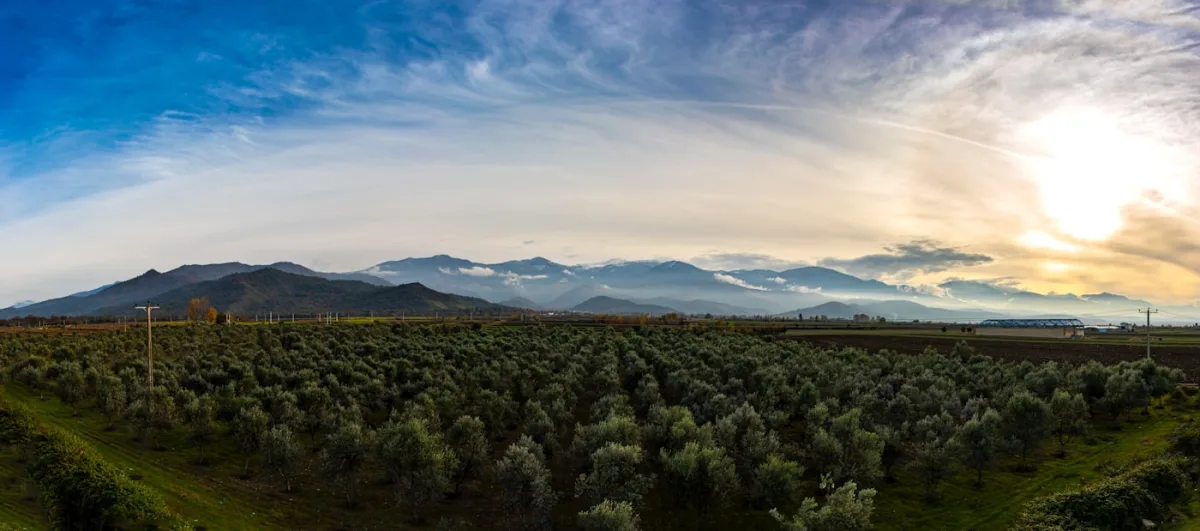
Land, long considered a traditional investment vehicle, has evolved into a strategic asset class amid global food crises and climate change. Investors are no longer merely acquiring real estate — they are buying into one of the most stable return potentials of the future. Yet land investments made through conventional, piecemeal, and individual methods carry significant risks: legal uncertainty, operational challenges, and a lack of economies of scale.
So how is it possible to minimise risk and maximise returns in agricultural investments? The answer lies in a single concept: Institutional Assurance.
1. Integrated Portfolio and Economies of Scale
One of the greatest challenges in individual land investments is that parcels tend to be small and scattered. Conducting professional farming or deploying modern technology on small plots is costly. The integrated portfolio approach offered by an institutional structure, however, gives the investor immediate access to hundreds of dönum of complementary or strategically diversified assets in a single move — reducing operational costs while delivering agricultural economies of scale.
2. Regional Diversification and Strategic Location Selection
A sound agricultural investment begins with choosing the right geography. Regions such as Çanakkale (Ezine, Lapseki), Tekirdağ (Şarköy), and Edirne (Meriç) — located at the crossroads of the Marmara and Aegean — stand out for both their proximity to logistics networks and their fertile soil. Institutional portfolio management distributes climatic and operational risks by combining olive groves, orchards, and arable fields, rather than concentrating in a single region.
3. Flexible and Legally Sound Transaction Structures
In a traditional land purchase, the process amounts to nothing more than a title deed transfer. Institutional structures, by contrast, can offer flexible models tailored to the investor's profile and liquidity preference:
- Direct Asset Sale: A straightforward solution for strategic buyers seeking a fast closing and full ownership.
- Share Transfer: A professional structure that preserves the portfolio's integrity and tax advantages — particularly suited to large-scale and international institutional investors.
- Partnership + Operator Model: Ideal for passive capital holders who want exposure to land without agricultural expertise. A professional operator manages the land while the investor benefits from profit-sharing and a phased exit.
4. Transparency, Confidentiality, and Legal Assurance
In individual land purchases, legal details such as title deeds, zoning status, road frontage, or agricultural conservation restrictions can easily be overlooked. In an institutional process, the entire operation is conducted under a non-disclosure agreement (NDA). Official valuation reports, cadastral data, and legal due diligence are presented to the investor in full. The process is managed in a completely transparent and data-driven manner, supported by drone footage, satellite imagery, and on-site visits.
In conclusion:
When investing in agricultural land — one of the safest havens of the future — the key to success is not hearsay, but institutional discipline, strategic positioning, and professional business models. Combining the bounty of the land with institutional assurance means securing not only today, but tomorrow.
To explore the land groups, regions, and flexible transaction structures that interest you, please contact us via our Contact page — and gain access to our valuation reports and title deed details under a confidentiality agreement.